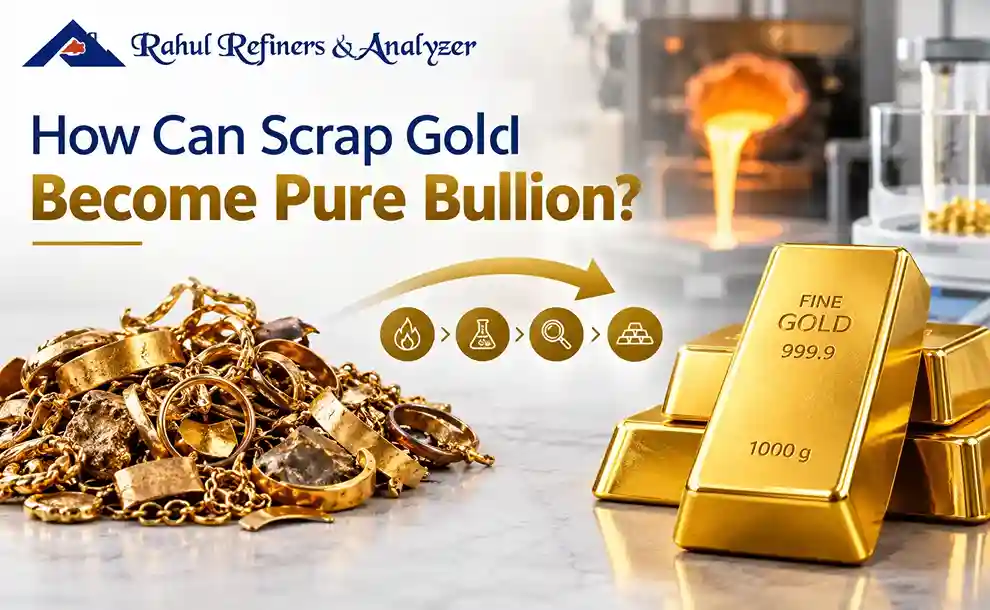
How Can Scrap Gold Become Pure Bullion?
Scrap gold may look like waste, but it can hold valuable recoverable metal. However, impurities, mixed alloys, and uncertain karat values can complicate the process. Understanding gold refining helps jewellers and gold owners make informed decisions. From purity testing to melting and refining, each step matters. Therefore, choosing a reliable gold refining service in Kolkata can support accurate evaluation and responsible metal recovery learn from Best Gold Buyer in Kolkata.
Table of Contents
How Does Gold Refining in Kolkata Turn Scrap into Bullion?
Gold refining involves separating gold from other metals and impurities to produce higher-purity gold. How do gold refiners convert karat scrap into bullion? They first assess the material, determine its approximate gold content, and select a suitable refining method. For jewellers and gold owners, understanding this process helps clarify purity, recovery, and the importance of professional testing.
What Are the Steps Involved in Converting Scrap Gold into Bullion Learn from Best Gold Buyer in Kolkata?
Converting scrap gold into bullion requires careful evaluation, controlled processing, and final purity verification. Although methods vary according to the material, professional refiners generally follow these stages. If you have interested to hire us for gold purchase click the link: https://wa.me/919674440159?text=I%20am%20interested%20in%20your%20services.%20Please%20call%20me.
1. Scrap Gold Collection and Inspection
First, the refiner examines the incoming material. It may include broken jewellery, manufacturing scraps, gold filings, or other gold-bearing items.
Next, the refiner separates materials when necessary and checks for non-metallic components, solder, stones, and other contaminants. This initial inspection helps determine the appropriate processing method.
2. Gold Weight Measurement and Purity Testing
Gold purity determines how much actual gold an item contains. For example, 22-karat gold contains approximately 91.67% gold, while 18-karat gold contains 75%.
Professional testing methods may include X-ray fluorescence (XRF), fire assay, or other suitable analytical techniques. Each method has different capabilities and limitations. Therefore, the refiner selects a method according to the material and required accuracy.
For reliable gold purity testing and refining in Kolkata, accurate sampling and appropriate testing procedures help establish the material’s composition before processing.
3. Sorting and Preparing Karat Scrap
After testing, the refiner sorts scrap according to its composition. This step matters because different alloys contain different proportions of gold, silver, copper, and other metals.
For example, mixing several grades without accounting for their composition can complicate recovery calculations. Therefore, proper sorting helps the refiner choose an efficient process and estimate potential gold recovery more accurately.
4. Melting and Homogenisation
Next, the refiner melts the prepared scrap using suitable industrial equipment and controlled conditions. Melting combines the metal into a more uniform mass, which can support sampling and further processing.
However, melting alone does not produce pure gold. Other metals generally remain in the mixture. Consequently, the refiner must use an appropriate separation and purification method to increase gold purity. Enquire now for more details click: https://rahulrefinery.com/contact
5. Refining and Separating Impurities
The refining stage removes unwanted metals and impurities. Depending on the material and required purity, professional facilities may use chemical, electrolytic, or other specialised refining processes.
Each method has specific requirements, benefits, and limitations. Moreover, qualified operators must manage heat, chemicals, ventilation, and waste according to applicable safety and environmental requirements.
As a result, refining can transform mixed-karat scrap into higher-purity gold suitable for subsequent verification and processing.
6. Final Purity Verification
After refining, the refiner checks the resulting gold to determine its purity. This verification helps confirm whether the material meets the intended specification.
Testing quality depends on the method, sample preparation, and laboratory procedures. Therefore, reliable documentation of the results is important for transparency, particularly when jewellers need to assess recovered metal for manufacturing or commercial use.
7. Casting Gold into Bullion
Once the gold reaches the required purity, the refiner can cast it into suitable bars or other bullion forms. The refiner controls the weight and casting process according to the intended specifications.
Finally, the refiner may record the weight, purity result, and other relevant details. These records help support traceability and provide a clearer basis for commercial evaluation.
Why Is Professional Gold Refining Important for Jewellers Learn from Best Gold Buyer?
Jewellers often handle production waste, old jewellery, filings, and mixed-karat scrap. Therefore, a dependable refining process can help them understand the recoverable gold content of their materials.
Professional refining offers several potential advantages:
- Improved purity assessment: Appropriate testing helps establish the gold content.
- Metal recovery: Refining separates gold from other metals and unwanted material.
- Better inventory management: Clear weight and purity records help jewellers track their gold.
- Informed commercial decisions: Verified results support discussions about refining charges and recovered metal.
- Consistent processing: Suitable procedures help manage different types of scrap more systematically.
However, actual recovery depends on the scrap composition, processing method, and losses during handling. Therefore, no refiner should guarantee an identical recovery percentage for every batch.
How Can You Choose a Gold Refining Company for Jewellers in Kolkata Know From Best Gold Buyer in Kolkata?
Selecting a refining partner requires more than comparing advertised rates. Instead, consider the company’s testing procedures, reporting practices, experience, and transparency.
Before choosing a gold refining company for jewellers in Kolkata, consider these points:
- Ask about testing methods. Understand how the company evaluates purity and whether the method suits your material.
- Confirm weight records. Request clear documentation of the weight received and the recovered metal.
- Discuss refining charges. Understand applicable fees, deductions, and settlement terms before proceeding.
- Check result transparency. Ask how the company communicates final purity and recovery figures.
- Review safety practices. Professional handling of refining equipment, chemicals, and waste is essential.
- Clarify delivery and settlement. Confirm how the company returns or settles the refined gold.
Furthermore, jewellers should retain relevant transaction records and clarify any applicable legal or regulatory requirements.
How Can Rahul Refiners and Analyzer Help with Gold Refining in Kolkata?
Rahul Refiners and Analyzer, led by Prakash Kumar Yadav, is associated with gold refining and purity evaluation services in Kolkata.
For jewellers and gold owners exploring refining options, the next step is to discuss the type of scrap, required purity assessment, expected processing stages, and settlement terms with the company. These details can help establish whether the proposed service meets the customer’s needs.
When comparing a Best Gold Buyer in Kolkata with a specialist refining service, remember that buying and refining serve different purposes. A gold buyer evaluates material for purchase, while a refiner processes gold-bearing material to recover and purify the metal. Some businesses may offer both services, but customers should confirm the exact services available.
When Should You Book Gold Purity Testing and Refining in Kolkata?
Consider professional testing and refining when you have mixed-karat jewellery, accumulated manufacturing scrap, gold filings, or material whose purity you cannot confidently establish.
Before you book gold purity testing and refining in Kolkata, prepare the available details about the scrap, including its approximate weight, known karat grade, and material type. Also, ask about testing charges, processing fees, expected timelines, and documentation.
Consequently, you can compare service terms more effectively and make a better-informed decision about recovering gold from your material. Check client review click: https://shorturl.at/Rw4gR
Conclusion
Turning karat scrap into pure bullion requires inspection, purity testing, sorting, melting, refining, and final verification. Each stage contributes to accurate evaluation and responsible gold recovery. For jewellers and gold owners in Kolkata, Rahul Refiners and Analyzer, led by Prakash Kumar Yadav, can be a starting point for discussing refining requirements, testing procedures, charges, and transparent settlement terms before proceeding with a service. Click on map: https://shorturl.at/Rw4gR
Frequently Asked Questions for Voice Search
1. How does scrap gold become pure bullion?
Scrap gold is sorted, weighed, melted, and assayed before being refined to remove unwanted metals. The purified gold is then tested for fineness and cast into bullion bars.
2. Can old gold jewellery be refined into 24-karat gold?
Yes. Old gold jewellery can be refined into high-purity gold by separating gold from alloy metals such as copper and silver. The final purity depends on the refining process and quality testing.
3. How do gold refineries test the purity of scrap gold?
Gold refineries use assaying methods, such as X-ray fluorescence (XRF) screening and fire assay, to determine the gold content of a sample. The appropriate method depends on the material and accuracy required.
4. What is the difference between gold smelting and gold refining?
Gold smelting uses heat to melt and process metal-bearing material, while gold refining separates gold from other metals and impurities to increase its purity. Both processes may be used when converting scrap gold into bullion.
5. How pure is gold bullion made from scrap gold?
Refined bullion can reach 99.9% or 99.99% gold purity, depending on the refining process and product specifications. For example, 99.99% fineness means the material contains 999.9 parts gold per 1,000 parts by mass.